

Exploring the Profound Science of Battery Tab Polarity — Did You Know?
The tab is a raw material of lithium-ion polymer battery products. The Bluetooth headsets, Bluetooth batteries and laptop batteries we use in daily life all need tabs.
A lithium battery has a positive and a negative electrode. The tab is the metal conductor that leads the two electrodes out of the cell; in plain terms, it is the contact point of the battery's two poles during charging and discharging
(much as we breathe through our nose). But this contact point is not the copper piece you see on the outside of the battery — it is a connection inside the battery.
Tabs are generally made from three materials: the positive electrode uses aluminum (Al), the negative electrode uses nickel (Ni), and there is also nickel-plated copper (Ni-Cu). All of them are composed of two parts,
a film and a metal strip, bonded together.
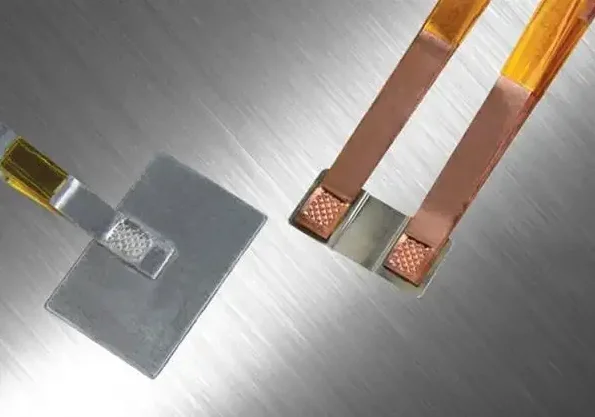
So here is the question: why does the positive electrode of a lithium cell use an aluminum tab while the negative electrode uses nickel?
1. Both are used as current collectors because they conduct electricity well, are relatively soft (which may also help bonding), are fairly common and inexpensive, and both can form
an oxide protective film on the surface.
2. The oxide layer on copper/nickel is a semiconductor that conducts electrons, but if the layer grows too thick the impedance becomes large. The aluminum oxide on aluminum is an insulator and does not conduct,
yet because it is extremely thin, electrons pass through by the tunneling effect. If the oxide layer is thicker, aluminum foil conducts very poorly or is even insulating. Current collectors are best surface-cleaned before use,
which removes oil and also strips away the thick oxide layer.
3. The positive electrode potential is high, and the thin aluminum oxide layer is very dense, which prevents the current collector from oxidizing. The oxide layer on copper/nickel is looser; to prevent oxidation, and because lithium rarely forms an intercalation alloy with copper/nickel at low
potential — but if the copper/nickel surface oxidizes heavily, lithium will intercalate with the copper/nickel oxide at a slightly higher potential. Aluminum foil cannot be used for the negative electrode, because lithium-aluminum alloying occurs at low
potential.
4. Current collectors must be of pure composition. Impure aluminum leads to a loose surface film and pitting corrosion, and worse, damage to the surface film can produce lithium-aluminum alloy.
In summary, these are the reasons why the positive electrode uses aluminum and the negative electrode uses nickel.