

What Is Laser Welding? Laser Welding Process Manual
What is laser welding? Laser welding is a new type of welding method aimed mainly at thin-wall materials and precision parts. It can perform spot welding, butt welding, lap welding and seal
welding, with a high depth-to-width ratio, narrow weld seam, small heat-affected zone, low distortion, fast welding speed, and a smooth, attractive seam that needs no post-treatment or only simple treatment.
Weld quality is high and pore-free, control is precise, the focused spot is small, positioning accuracy is high, and automation is easy. It is precisely because laser welding has so many advantages that it
plays an important role in the application of laser material processing technology.
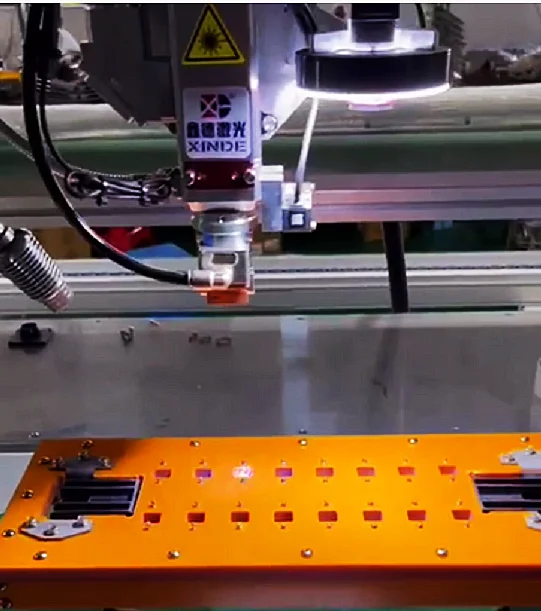
The welding process is of the heat-conduction type: laser radiation heats the workpiece surface, and the surface heat diffuses inward by conduction. By controlling laser pulse width, energy, peak power
and repetition rate, the workpiece melts to form a specific molten pool. Thanks to its unique advantages, it has been successfully applied to the welding of micro and small parts. The advent of high-power CO2 and high-power
YAG lasers opened up new fields for laser welding, achieving deep-penetration welding based on the keyhole effect, which has been used increasingly widely
in machinery, automotive, steel and other industrial sectors.
Compared with other welding technologies, the main advantages of laser welding are fast speed, deep penetration and low distortion. It can weld at room temperature or under special conditions, and the welding
equipment setup is simple. For example, a laser beam passing through an electromagnetic field does not deflect; lasers can weld in air or in certain gas environments, and can weld through glass or materials
transparent to the beam.
After focusing, the laser's power density is high. When welding high-power devices, the depth-to-width ratio can reach 5:1 and up to 10:1. It can weld refractory materials such as titanium and quartz, and can weld dissimilar
materials with good results. For example, copper and tantalum, two materials with completely different properties, can be welded together with an almost 100% pass rate. Micro welding is also possible. Once focused, the laser
beam produces a very small spot and can be precisely positioned, so it can be applied to the assembly welding of micro and small components in high-volume automated production, such as integrated circuit leads,
clock hairsprings and picture tube electron gun assembly. With laser welding, productivity is high, the heat-affected zone is small, the weld is contamination-free, and welding quality is greatly improved.
The role of laser welding:
It can weld hard-to-reach locations and perform non-contact remote welding with great flexibility. The use of fiber transmission in YAG laser technology has given laser welding
broader promotion and application. The laser beam can easily be split in time and space, enabling simultaneous multi-beam processing and multi-station processing, which creates the conditions
for more precise welding.