
Why Nickel-cobalt-manganese Lithium Becomes the New Favorite Cathode Material?
Nickel-cobalt-manganese (NCM) lithium is the full name of the ternary lithium battery, where "ternary" refers to the cathode materials of the battery — "nickel", "cobalt" and "manganese" or "aluminum". NCM replaces at least two-thirds of the cobalt in lithium cobalt oxide with relatively cheap nickel and manganese, which greatly reduces the cost of ternary lithium batteries. Compared with other lithium-ion cathode materials, NCM and lithium cobalt oxide are clearly very close in chemical and processing performance, which has made NCM the
new favorite among next-generation lithium-ion battery materials.
So why can NCM become the new favorite of next-generation lithium-ion battery materials? What makes it stand out?
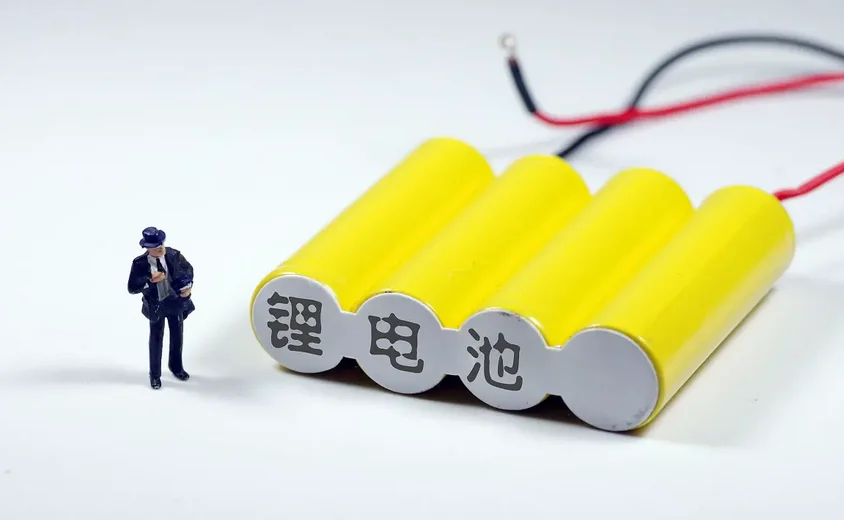
1. Long cycle life: at 1C the cycle life can reach 500 cycles with capacity still above 80%;
2. High voltage platform: stable and reliable cycling in the 2.5–4.3/4.4 V range;
3. Ideal crystal structure, low self-discharge, no memory effect and other outstanding advantages;
4. High energy density: theoretical capacity up to 280 mAh/g, with actual product capacity above 150 mAh/g;
5. Good cycling performance, with excellent cycle stability at both room and high temperature;
6. Good thermal stability: the material is thermally stable in decomposition when charged at 4.4 V;
With so many outstanding advantages, NCM is used widely across many fields. Power batteries, tool batteries, polymer batteries, cylindrical cells and aluminum-shell cells are all
customers of NCM.
Precisely because NCM is so widely used, pressure on manufacturers of NCM batteries has grown. Demand has risen sharply, which means hiring large numbers of professional welders — but with the pandemic not fully over, and some regions even showing signs of a resurgence, recruiting has become a major problem for companies. Faced with high demand and an urgent need for labor, Xinde Laser welding equipment has proved extremely useful.
Xinde Laser welding machines are mostly very simple to operate — easy to pick up, with no welder certificate required — and the weld quality is excellent: high precision and a weld surface free of bubbles. For manufacturers with large NCM output, they are a real helping hand.
Thanks to these advantages — less cobalt, lower cost, higher energy density — NCM is already used in large volumes in power cylindrical cells.