

What Is the Difference Between a Laser Welding Machine and a Cold Welding Machine, and What Are Their Characteristics?
With technological progress and the continuous improvement of living standards, laser welding machines as processing equipment are increasingly widely used and gradually applied in daily life.
So is the similarly named cold welding machine also used for welding? What is the difference between the two?
I. Principle
The principle of a multifunctional cold welding machine is to use a charging capacitor to discharge in an ultra-short time of 10 to the power of -3 to 10 to the power of -1 seconds (period) and 10 to the power of -6 to 10 to the power of -5 seconds. The electrode material and workpiece contact area
are instantly heated to 8000°C–10000°C, and the plasma-state molten metal transitions to the workpiece surface metallurgically.
Why can a multifunctional cold welding machine achieve cold welding? As shown in the figure:
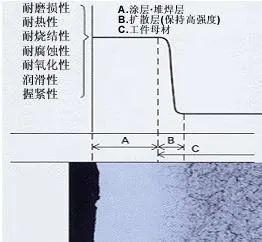
The discharge is extremely short, so the machine has sufficient relative stop time, and heat diffuses through the workpiece substrate to the outside. Therefore the processed area of the workpiece has no heat concentration. Although the
workpiece temperature remains almost at room temperature, due to instantaneous melting, the electrode tip temperature can reach about 10000°C.
A laser welding machine uses high-energy laser pulses to locally heat materials in a micro-region; the laser radiation energy diffuses into the material interior via heat conduction, melting the material
to form a specific molten pool, achieving the welding purpose.
II. Characteristics
Cold welding machine
1. Reasonable design, free adjustment—select different discharge frequencies for different metal materials to achieve the best repair effect.
2. Small heat-affected zone; no heat input during the instant overlay process, thus no deformation, no undercut, and no residual stress. No local annealing occurs; no re-heat treatment needed after repair.
3. Minimal welding impact—the cold welding machine overcomes the phenomenon of ordinary argon arc welding affecting the surrounding workpiece during repair. It can safely repair workpiece surfaces with no allowance.
4. High bonding strength: deeply penetrates the workpiece surface material, producing extremely strong adhesion.
5. Portable, light weight, 220V power supply, no workpiece environment requirement.
Laser welding machine
1. Small heat-affected zone; most workpieces basically do not deform.
2. Fast welding speed, improving production efficiency.
3. The laser beam can be focused on a very small area, welding small and closely spaced components.
4. Wide range of weldable types; also controllable digitally or by computer.
5. Can weld two metals with different physical properties (e.g., different resistances).
6. Can switch the device to deliver the laser beam to multiple workstations, easily achieving automated mass production.
The above is the difference between laser welding machines and cold welding machines. Both devices have their own characteristics; which one to choose depends on your own factory's needs.