

Key Precautions When Laser Welding Aluminum Alloy!
Xinde Laser welding machines can weld aluminum and aluminum alloy materials, offering advantages such as high energy density and high welding speed, providing great convenience for welding aluminum and aluminum alloys. Whether aluminum alloy products or components are to be welded firmly with a beautiful seam, the laser welding machine is an indispensable helper. Although laser welding of aluminum alloys yields good results, it cannot avoid the inherent shortcomings of the material itself (such as high reflectivity and low absorption of aluminum alloys), which increases the difficulty of laser welding—so several aspects must be noted during welding.
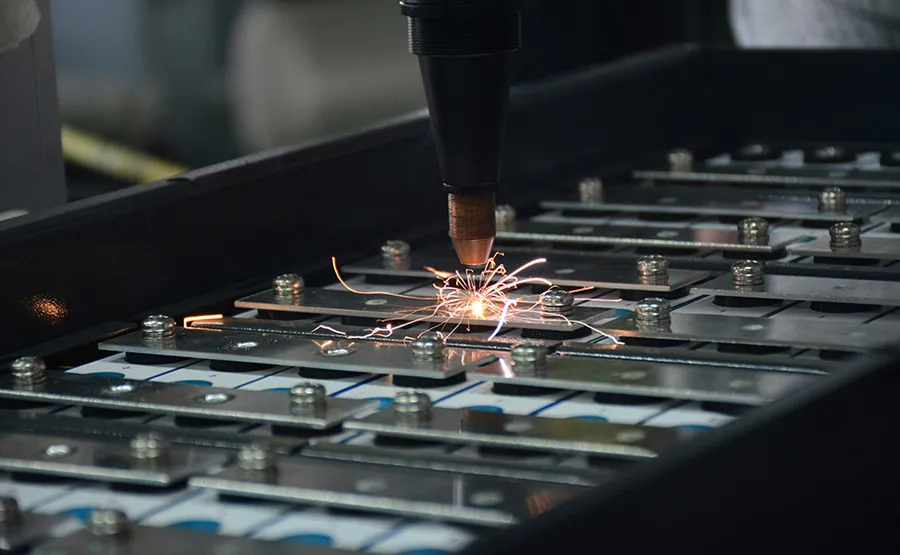
When laser welding aluminum alloy, a light-reflection phenomenon appears on the alloy surface. Because aluminum alloy is a non-ferrous metal with strong reflectivity to all kinds of light, before welding aluminum alloy materials the surface must be cleaned—remove surface oil or other stains, and also clean the oxide film on the metal surface to prevent oxidation during welding that could cause accidents such as explosions.
Pre-weld cleaning: when welding aluminum and its alloys, strictly remove the oxide film and oil from the workpiece weld seam and the welding wire surface before welding.
1. Chemical cleaning: highly efficient and stable, suitable for cleaning welding wire and small, batch-produced workpieces. Two methods are available: immersion and wiping. Use acetone, gasoline, kerosene, or other organic solvents to degrease the surface, then alkaline-wash with a 5%–10% NaOH solution at 40°C–70°C for 3–7 min (pure aluminum slightly longer but no more than 20 min), rinse with running water, then acid-wash with a 30% HNO3 solution at room temperature to 60°C for 1–3 min, rinse with running water, and air-dry or low-temperature dry.
2. Mechanical cleaning: used when workpieces are large, production cycles are long, for multi-layer welding, or when re-contaminated after chemical cleaning. First wipe the surface with acetone, gasoline, or other organic solvents to remove oil, then brush directly with a copper or stainless-steel wire brush of diameter 0.15–0.2 mm until the metal luster is exposed. Generally avoid grinding wheels or ordinary sandpaper to prevent sand grains remaining on the metal surface and entering the molten pool during welding, causing slag inclusions. A scraper or file may also be used to clean the weld surface. If stored too long (e.g., over 24 h) after cleaning, reprocess.
3. Backing plate: aluminum alloy has very low strength at high temperature and liquid aluminum flows well, so the weld metal easily sags during welding. To ensure penetration without collapse, a backing plate is often used to support the molten pool and surrounding metal. The plate may be graphite, stainless steel, carbon steel, copper plate, or a copper bar, with an arc-shaped groove on its surface to ensure back-side formation. Single-side welding with double-side formation without a backing plate is possible but requires skilled operation or advanced measures such as strict automatic feedback control of arc energy.
4. Pre-weld preheating: thin, small aluminum parts generally need no preheating; for thicknesses of 10–15 mm, preheat before welding. Depending on the aluminum alloy type, preheat temperature may be 100°C–200°C, using an oxy-acetylene flame, electric furnace, or torch. Preheating reduces deformation and defects such as porosity.
Therefore, when laser welding aluminum alloy, strictly note and rapidly increase the laser power density to prevent reflection or conduction.