

The 4 Common Types of Laser Welding
Battery Explosion-Proof Valve Welding: The explosion-proof valve of a storage battery is a thin-walled valve body installed on the battery's sealing plate. When the internal battery pressure exceeds the specified limit, the valve body fractures,
thereby preventing the battery from exploding. The safety valve design is very delicate, and this process demands very high laser welding technology. Before continuous laser welding was adopted, pulse laser
welding was used for the explosion-proof valve; the overlap and coverage between weld spots could approximate continuous welding, but both welding efficiency and sealing performance were relatively poor. Adopting continuous laser welding technology
ensures welding stability, efficiency, and product yield.
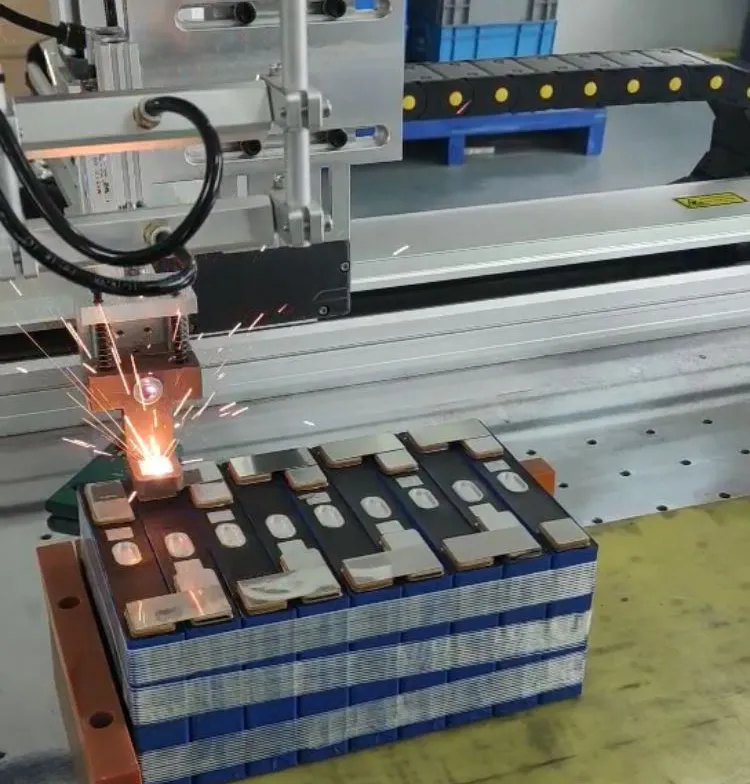
Battery Terminal Welding: There is an electrode on the battery cover plate, consisting of two parts: the internal and external connections. The internal connection welds the cell to the cover plate electrode,
while outside the battery, busbars weld the terminal posts together to form series and parallel circuits. The battery terminal posts are the positive and negative electrodes, usually made of
aluminum, while the negative electrode is made of copper. Riveting is typically used first, followed by full welding, generally in a circular shape of about 8 mm. During welding, while ensuring tensile strength and conductivity,
high-quality, uniformly distributed fiber lasers or hybrid welding lasers should be selected. Using fiber or hybrid welding lasers enables aluminum-aluminum structures, improves
weld quality, reduces spatter, and enhances welding quality. Xinde Laser's welding equipment welds battery tabs and terminal posts with excellent results.
Tab Welding: Tab welding is an important step connecting the battery cover and the cell. This method must balance the battery's over-current performance, strength, and low spatter, while during welding
to the cover plate, it must ensure nothing falls onto the cell to avoid short circuits. Copper, used as the negative electrode material, is a highly reflective material with low absorptivity.
Enclosure Sealing: The power battery enclosure is made of aluminum alloy or stainless steel, predominantly aluminum alloy, with pure aluminum rarely used. Stainless steel is the best material for laser welding. Using pulse
or continuous laser both yield good welding results. Continuous laser welding of thin-shell lithium batteries can improve efficiency by 5–10 times, while delivering good appearance and sealing performance.